
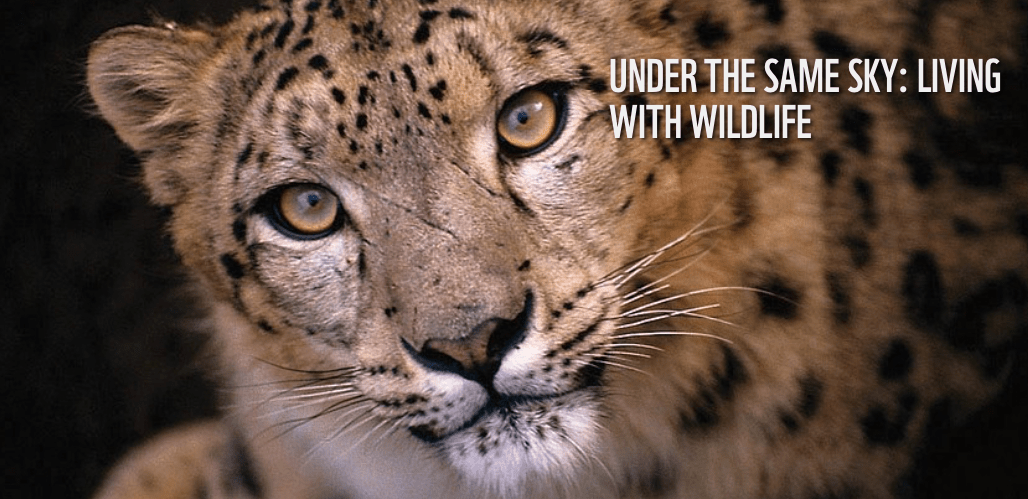
 An extract from Under the Same Sky: Living with Wildlife
(Published: WWF-India website,2017)
Somewhere in the Sundarbans, Asit Mondal’s voice rings clear over the humming of the crickets and the soft, steady sound of the river in the distance. The children of Tiplighiri sit huddled around him under the bright light of the solar lamp post as Asit narrates his story in a practiced tone.
“It happened 9 years ago, not very far from here. We were returning home after a day of fishing, three others and I, just as the sun was dipping below the trees.
And then in a flash of orange and black he was upon me – claws and teeth and wild fury. It was my bare, skinny arms against his claws of steel.
But I fought on, punching and kicking till he had had enough. He left in shame, unable to defeat even a feeble fisherman like me. But he left me this…”
Asit lifts his shirt to reveal the remnants of a deep gash running through his torso. The children gasp, as they do every time they hear the story. Asit Mondal may be a hero in the eyes of the children of his village, but the attack has left him with little else. He has since been unable to work and faces serious health problems.
Around 12 incidences of tigers straying into human settlements are recorded in the Sundarbans every year, a result of the expansion of human settlements that then spill onto tiger habitats. These lead to the tigers attacking cattle, sometimes humans, and in humans retaliating against the tigers.
Worrisome as this is, these instances of “human-wildlife conflict” can become rarer – when governments, organizations and local communities come together to help keep the peace.
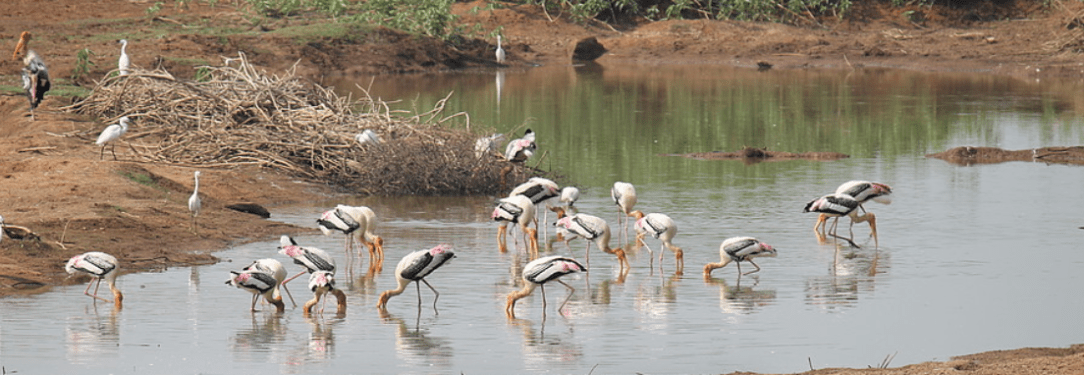
An extract from Kokkare Bellur: Nest in Peace
(Published: WWF-India website, 2017)
Legend has it that the storks and pelicans have been coming to Kokkare Bellur to breed for hundreds of years. A small village about 80 kilometers from Bangalore, ‘Kokkare Bellur’ in Kannada means “the hamlet with white storks” and was situated on the banks of the river Shimsha until the early 1900s. When a plague in 1916 forced the villagers to abandon their settlement and relocate a few kilometers from the river, they noticed something curious.
The birds that the villagers had grown accustomed to sharing their old residence by the river with, had followed them. This would have been normal, had the relocation of the village been near a river or large water body – everyone knows that wetlands and birds go together.
But in this case, the birds had followed the people to a place with no large water tank or river in close proximity. It did not make sense – to anyone outside the village.
For the villagers themselves, this was extraordinary…but not unusual.
Just as the 140 species of birds that had already chosen the village along the river as their home, so also had the people of Kokkare Bellur adopted the hundreds of storks, pelicans, grey herons, ibis and other birds, likening them to their own daughters returning to the village to deliver their young.
These people, mostly dependant on agriculture for their livelihood, used the bird droppings, rich in nitrogen and phosphate, as manure. They would dig huge pits around the trees the birds had chosen to nest in and allow the nutrient-rich bird droppings to accumulate. This is supplemented with a layer of silt collected from the lakes nearby, over which more droppings would fall. This dropping-silt mixture would be excellent manure for their fields.
And so, no one could tell which was true of Kokkare Bellur – a village that had built itself around nests, or one that was itself a cradle for life.
Image credit: WWF-India
 outerface.org